
Greetings, Trailblazers! 🌟
After a year-long hiatus to refocus NARU and rebrand itself as a community platform built for impact, we are back with edition 13 of the NARU newsletter.
During this time, we have researched community management tactics across multiple communities through affiliation with The Community Collective, and discovered a new theory of community engagement: The 3 Pillars of Community Impact.
In the world of community building, “engagement” is the gold at the end of the rainbow. It’s always sought after, mysteriously appears when you least expect it to, and when it does happen, hard to replicate again.
In this article, I’ll be breaking down community engagement into 3 pillars, based on the SPACES model by David Spinks.
Note: While the SPACES model showed us that there are 5 different types of communities, the 3 Pillars framework applies to all communities aiming for long-term impact — for their members and the community.
What are the 3 Pillars?
The 3 Pillars of Community Engagement are inspired by Mel Robbin’s 3 pillars of friendship in her podcast episode “Why Making Friends as an Adult Feels Impossible & What to Do About It” — where she spoke about how Proximity, Timing and Energy determine the quality of friendships we make.
Proximity refers to physical closeness, such as living near someone.
Timing relates to being in a similar life stage or going through similar experiences together.
Energy describes the dynamic compatibility between people, or whether you simply “click”.
If one of these pillars shifts or disappears, a friendship often changes, but it’s usually not a personal failing but rather a natural consequence of life’s changes.
The simple thing is, communities and making friends are not so different after all (imagine a network of people who are intimately connected with 1 or 2 other people in the network — that’s the definition of a community).
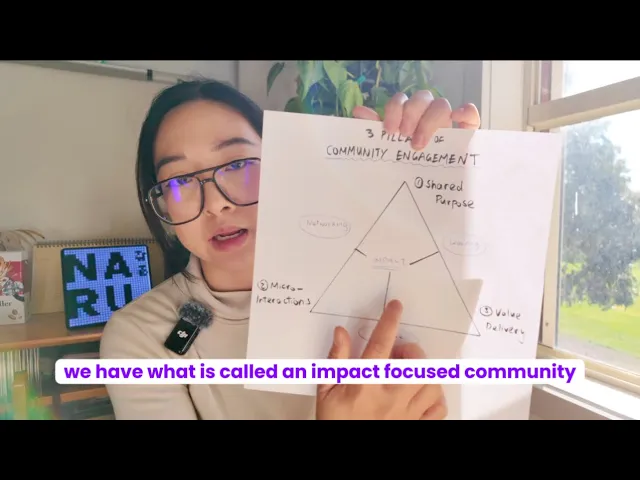
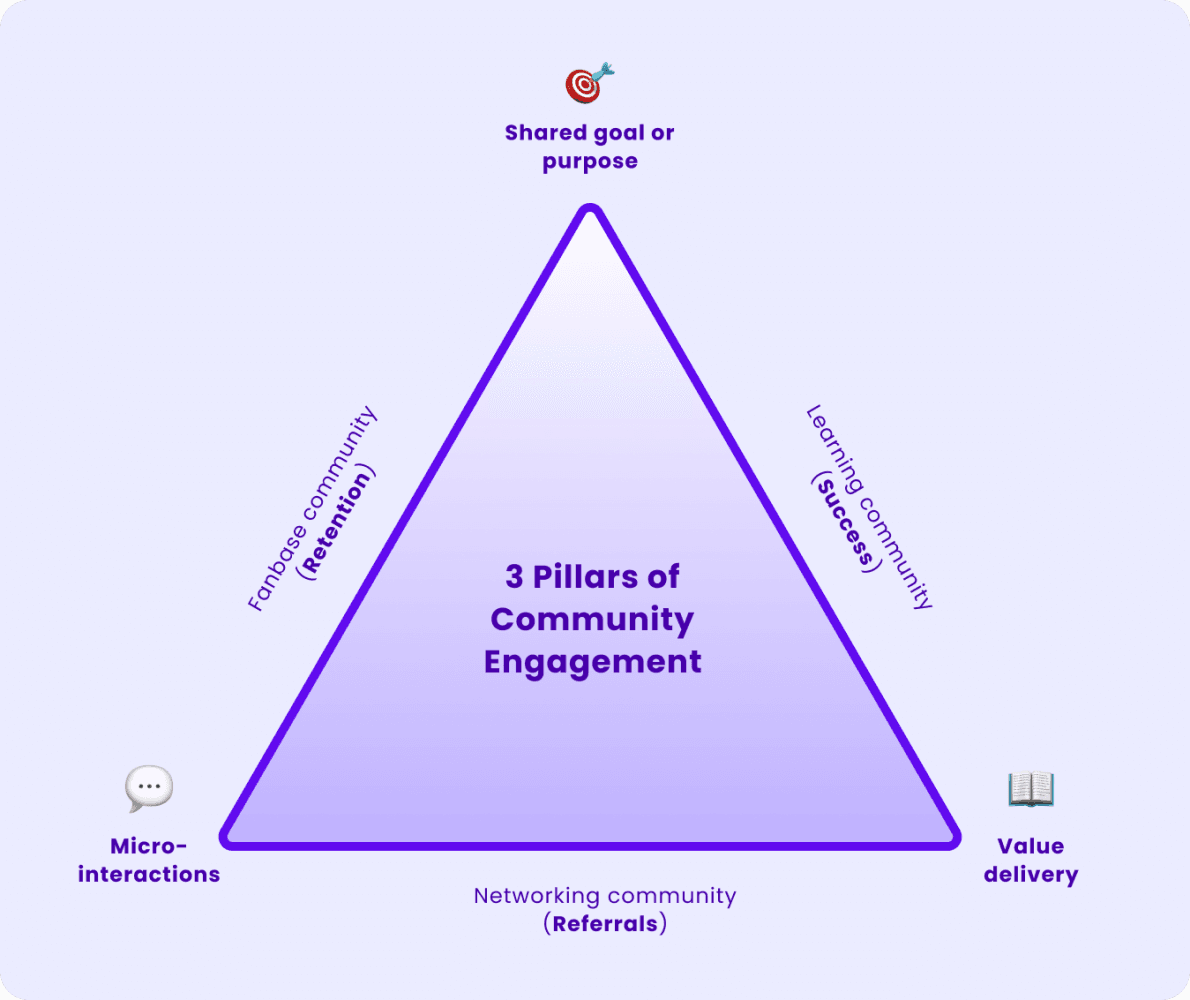
Introducing the 3 Pillars of Community Engagement:
Shared goal/purpose of all members to grow within a community
Micro-interactions between each member and 1–2 other members
Value delivery of the community manager to provide specific solutions and support to help their members reach their goals/purpose
Pillar 1: Shared goal/purpose
Having a shared goal/purpose for your community means you understand what each member wants to achieve by being in your community.
What it looks like
This could be a mixture of different goals for different people — some may want to simply show up and support, some may want to start a new habit and go on a 30-day challenge to transform their life.
The common ground is — everyone’s goals are unique to them and must be intrinsically motivated by their deeper reason “why”. If they know why they want to show up, they will know how to show up.
In my experience working with communities, we have seen members show up to land a job, to overcome health challenges, to feel more confident and to overcome imposter syndrome. Confidence takes action. And with any personal growth journey, having a deeply rooted reason and long-term goal directs your members every day to stay on track to achieve their goals.
Strategies to implement
Ask each of your members to share their goals in the community during onboarding. We find it is generally easier to do it in small groups where there are common goals involved, as it makes it less daunting for members who are afraid of putting themselves out there.
Keep members accountable to their goals with reminders and check-ins. This could be a regular calendar invite to ask members to share the progress they have — or have not made yet — on their goals. The key here is creating a judgment-free environment where every small progress is celebrated, and every challenge is met with empathy and support.
Common challenges
The biggest challenge when it comes to member goals is keeping track of the everyday progress of your members, especially when times get tough. We usually see members kick off with a lot of motivation at the start, only to see it wane off as learning fatigue settles in and excuses start feeling like the new normal. It’s hard to keep track of members’ growth over time when members lack the motivation to show up.
Solutions in NARU
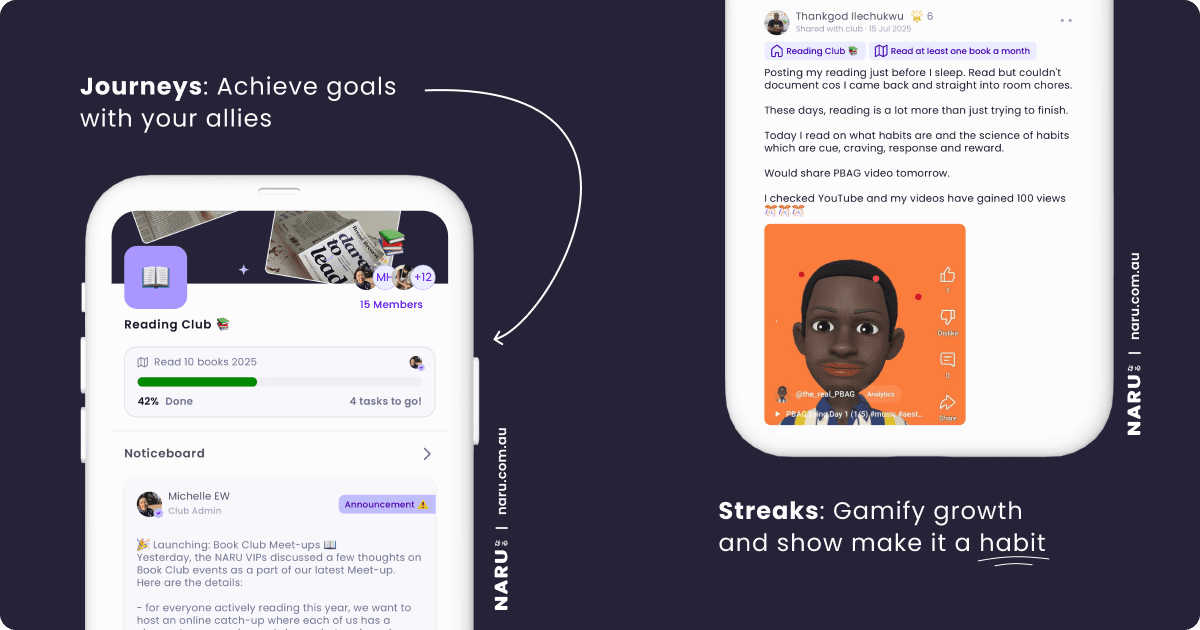
Journeys is a core feature on NARU and the biggest differentiating factor between our platform and others (e.g. Slack, Mighty Networks, Circle). We encourage every member of your community to create goals in the form of a Journey — where they can track tasks and add journey posts to mark every progress made towards their goal, no matter how big or small.
Streaks is a gamification feature attached to Journeys in NARU, allowing members to keep track of consistent progress made within consecutive days and reward them for showing up to work on their goals. The fun thing about this is that other members can see and celebrate your streak with you — creating a ripple effect of peer support and motivation.
Pillar 2: Micro-interactions
Allowing spaces to facilitate 1–1 conversations between like-minded members in the community, without you being present.
What it looks like
Micro-interaction is often seen as the “spirit” of the community. This looks like members remembering a shared moment from an event and having a conversation about it over a cuppa in person. Or a small group of members meeting up online to share feedback and support one another through their challenges. The beautiful thing about micro-interactions is that it is usually how members remember you.
Most people, when they attend an event, don’t remember the content of the event itself, or the food, or the decor, or how the facilitator might have made a few stutters and slipped up (trust me, people don’t judge you for it).
They remember the moment they shared while exchanging takeaways and opinions with a friend they just met at the event, or connecting on social media afterwards, and talking about how great the event was and how they can meet each other again in the next one. It’s how friendships blossom— in the most unpredictable ways, not under the control of the community manager, but simply following the nature of friendship itself.
Strategies to implement
Match members in small groups (recommended 3–4 people maximum). According to the Elephant Group theory, people are most likely to thrive in small groups because it gives each individual just enough attention to feel validated, but not too much to feel judged by others.
Invite members to check in on one another through chat, online video calls, in-person and through mutual events. Frequency is key here — the more reasons that members have to communicate with one another, the more connected they will feel. Just like in school when we saw our peers every day without choice, we naturally form our closest friends with the people we spend the most time with.
Common challenges
In most communities, we have seen time and again that it is hard to drive online engagement, whether it is after events, between programs, or even to kick-start a group of strangers who are shy to talk to one another. The “brute strength” method that many community managers use is to have 1–1 conversation with each and every member in the community. Multiply this by the number of days/weeks/months in the program, and you have a very booked calendar and a burnt-out community manager.
Solutions in NARU
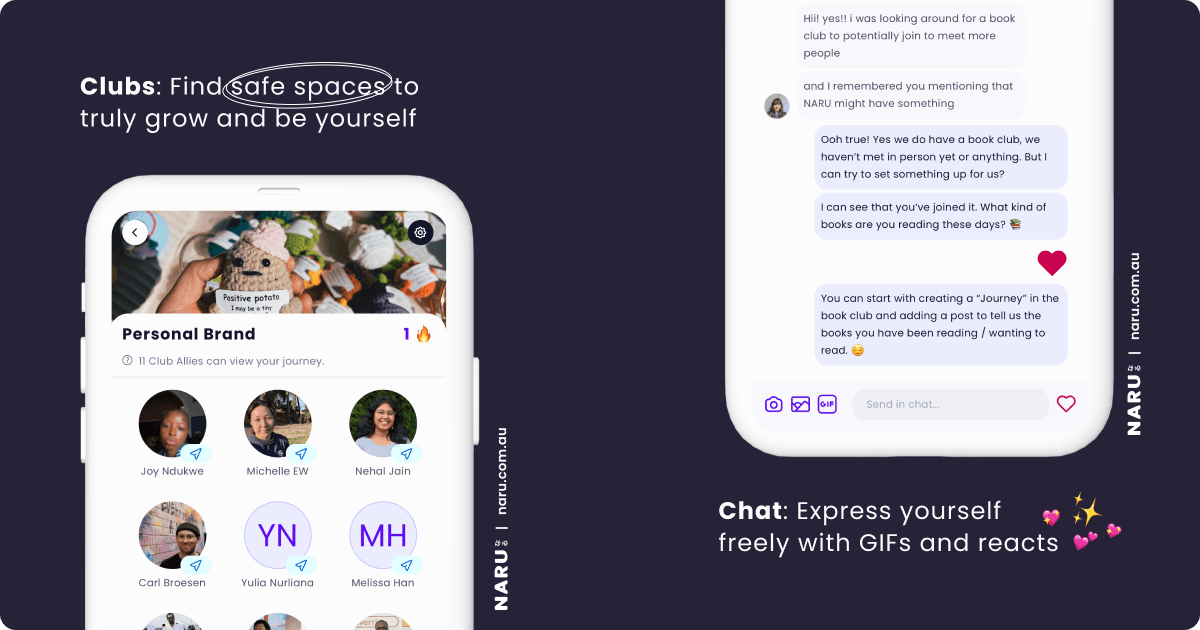
Clubs were created in NARU to form an alliance of members within a smaller group for a program, cohort or simply a shared interest. When members join a Club, they can bring their Journey into the Club to work on with other Club members — sparking a way to support one another in their individual goals, while still interacting with the collective. Higher quality engagement means long-term engagement.
Chat was brought onto NARU as an organic way for members to interact without leaving the community platform. We have fun features like GIFs that allow members to express themselves more freely through humour and videos, because personal development and showing up for a friend should feel exactly that way — fun.
Pillar 3: Value delivery
To deliver value means to make sure it’s relevant and accessible to your members — reaching them where they are.
What it looks like
As a community manager, often the value that you can provide is what members are looking for. You are the expert in the industry topic that your members are discovering for the first time. You have the training, access to the network, and the knowledge gained through hard-earned experience and trial and error — but the challenge now is packaging all of that into content that is easily digestible and timed to exactly when your members need it.
When value delivery is done well, instead of simply reaching out to you for answers, your members are looking for the answers themselves in the content that you have provided them. Whether it is through videos, articles, or reaching out to someone else who’s an expert, all the knowledge that exists within the community should be a standalone resource for members to explore on their own, at their own pace, and when they need it. Having a mature content library means you get to save time on repetitive tasks and answering the same questions, and instead spend time on what truly matters (think operations, instead of to-do lists).
Strategies to implement
Ask members what they want to learn during onboarding so that you have a clear understanding of the type of problems your current members are facing and what resources may suit them the best. This may vary cohort to cohort, and so it is best done every time you onboard a new set of people. The members that you seek to join your community also change over time. With changing needs, the more information you have, the easier it is to create relevant and helpful resources that don’t take 10 hours of shifting through content to find the answers to.
Share resources, directories and events incrementally — so members have what they need to learn and grow. In the same way that you don’t expect a child to know what they need, displaying all information in front of your members is usually not helpful and can overwhelm your members with decision fatigue, especially early on when they are just starting out. However, recommending them pathways of learning gives members actionable tasks to complete, so they can focus on practising instead of passively absorbing.
Common challenges
We’ve seen what community engagement sometimes looks like — links pasted in a group chat, saved messages, posts that are missed and hard for newer members to find (even history deleted at times when the community is on a free plan and only has access to the last 90 days of posts — looking at all the Slack channels out there). Other common challenges include when the tech stack gets too complicated, causing members to spend a long time getting used to a new platform just to access certain resources that aren’t available anywhere else. Problems like this, while small, create exponential hardship for members who are short on time or need that convenience to get things organised when life feels too messy and overwhelming.
Solutions in NARU
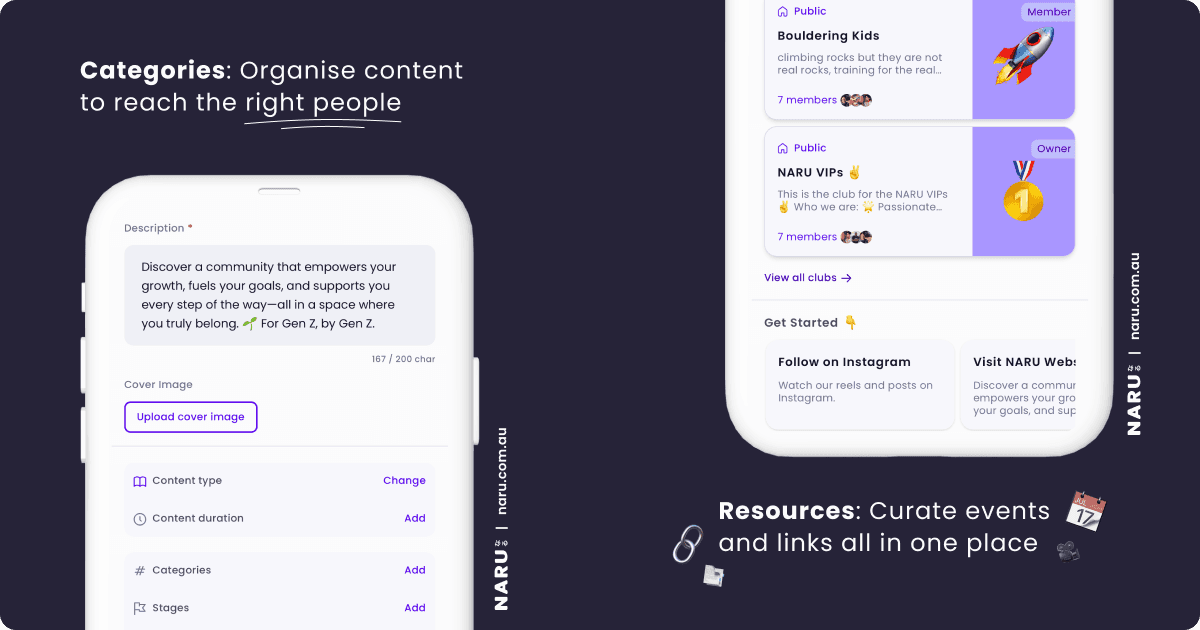
Custom interests & categories— set custom interests for members to fill out when they are onboarding onto your community. Curate resources and match categories with interests to recommend content to members on a granular level, to remain relevant and eliminate decision fatigue. As members grow and gain different interests, their recommendations change with them so that their needs are always met at any time.
Resource management — we make it easy for members to find all your resources in one place by using external links displayed in a content format that is easily searchable and sortable through filters. With Clubs, resources and events can have custom visibility to only show to certain groups of people who may be a part of a program, allowing for pay-to-access content.
Analytics — we track every engagement through our dashboard analytics to allow you to measure the total number of clicks and the total number of unique members who have accessed the resource, giving you full transparency of content intake and member engagement.
3 Types of Communities
In summary, we have explored the 3 Pillars of Community Engagement:
Shared goal/purpose of all members to grow within a community
Micro-interactions between each member and 1–2 other members
Value delivery of the community manager to provide specific solutions and support to help their members reach their goals/purpose
While all 3 above pillars are necessary to create an impactful community, we have explored circumstances where focusing on just 2 of the pillars can create a different environment of engagement for members, depending on the served purpose of the community.
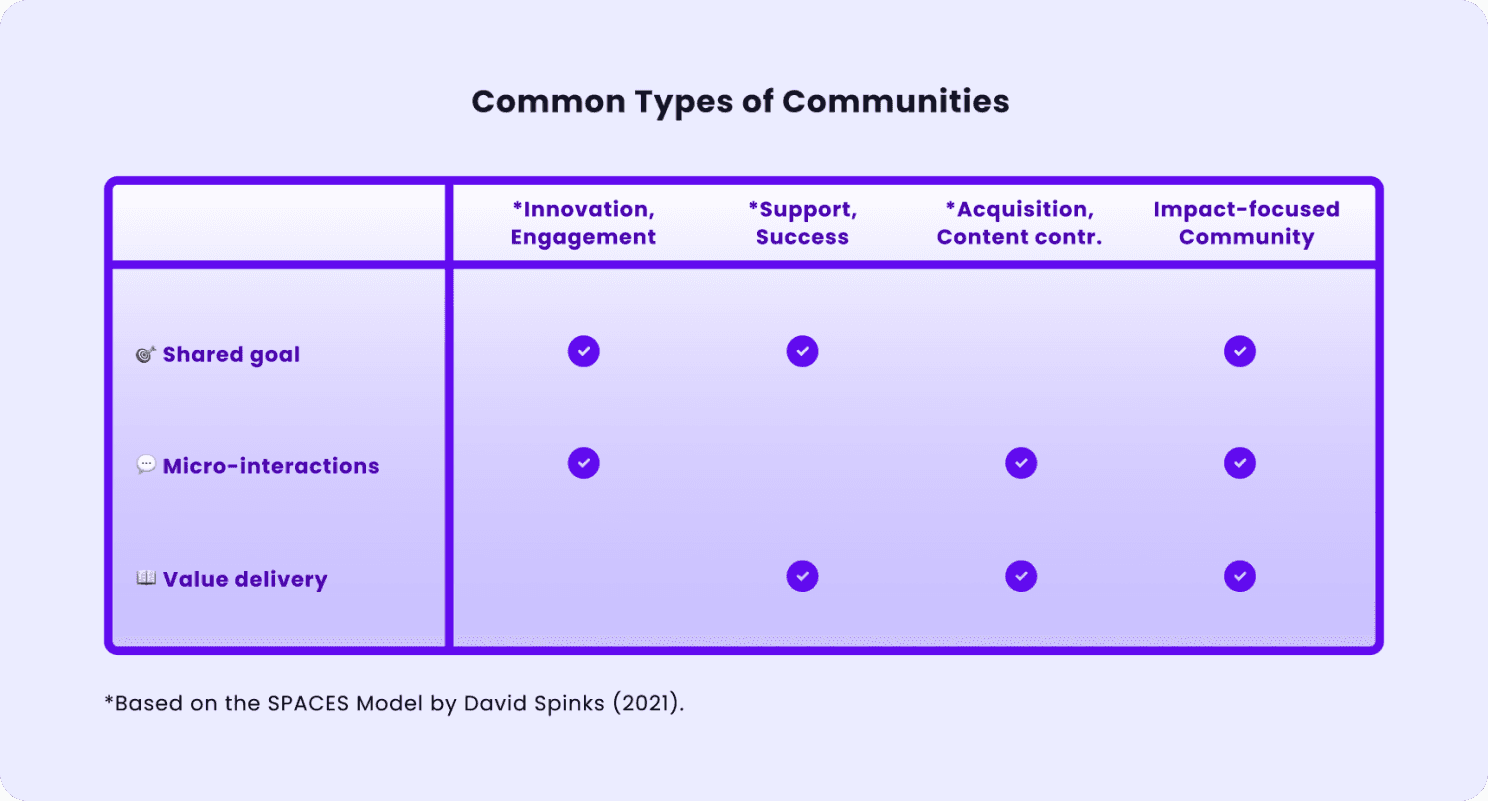
📺 Fanbase community (Retention): Shared goals + Micro-interactions
These communities are your Potterheads for Harry Potter, ARMY for the band BTS, Swifties for Taylor Swift, and Thronies for Game of Thrones, all formed around shared cultural passions like books, movies, and music. They can also be your product communities, such as Asana and Notion. These communities form through members participating in discussions to express their shared enjoyment and support for a brand or product.
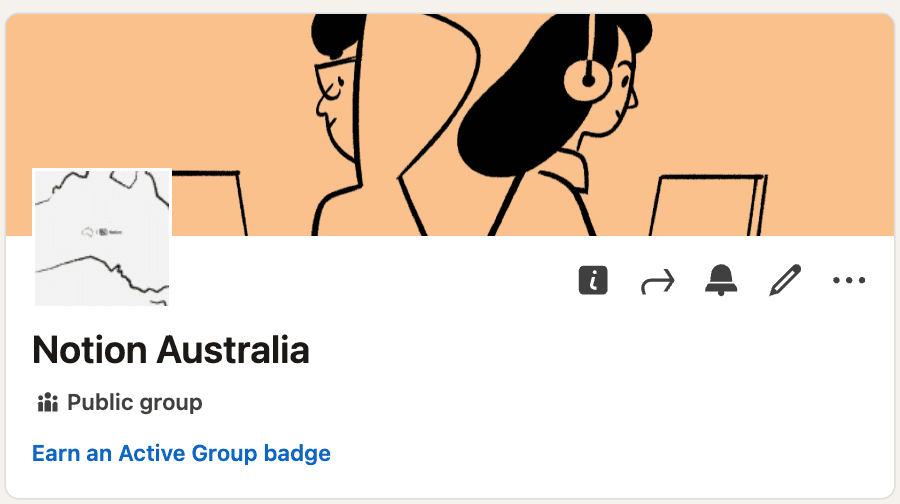
Their focus on a shared goal/purpose is intentional because they often lean into a niche topic or industry that results in more intimate interactions between members. They enable conversations about the “topic of interest” and help individuals feel like they are contributing to something much larger than themselves.Notion Australia Community (LinkedIn)
In the SPACES model, this type of community is also called “Product Feedback/Innovation” and “Engagement".
🤝 Networking community (Referrals): Micro-interactions + Value Delivery
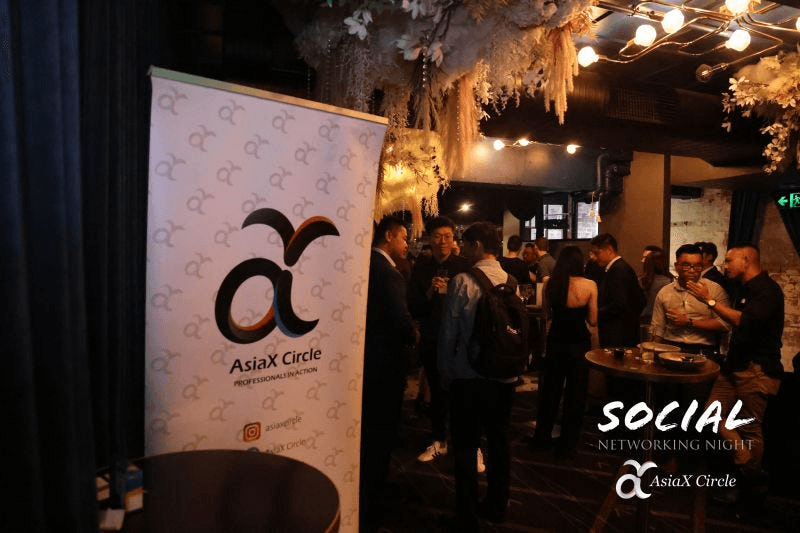
These communities focus on value delivery, often achieved through hitting a critical mass of community members, as well as micro-interactions between these individAsiaX Circle Social Networking Nightuals in a shared space and time.
For example, AsiaX Circle is a professional networking community that builds an environment for the Asian-inspired professional to reach beyond their potential. They focus on the value that Asian-inspired professionals have to connect and collaborate with each other, while facilitating events to allow these micro-interactions to happen.
In the SPACES model, this type of community is also called “Acquisition/Advocacy” and “Content contribution”.
📖 Learning (success): Shared Goal + Value Delivery
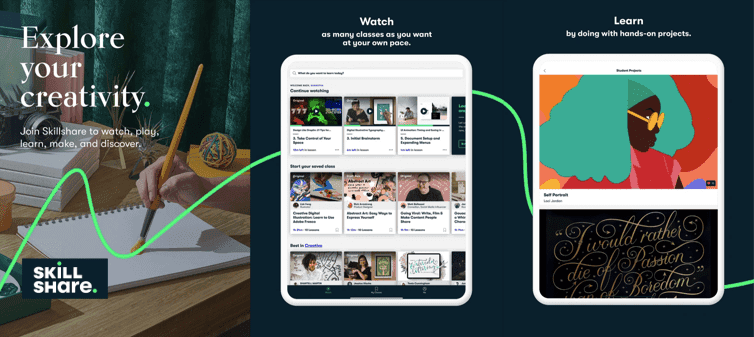
The learning communities can be likened to the millions of programs on Skillshare, Coursera, Udacity, Udemy and many other platforms offering a robust learning management system (LMS), but not much 1–1 interaction between members doing the program themselves.
While there could be a missed opportunity to engage these members to further become advocates of the program, these LMS platforms focus on individual learning and “self-study” of members at their own pace, often without the need to interact with any other coach or mentor. The ease of “no-interaction” here is a low barrier of entry to many for obtaining skill certificates and acquiring knowledge that is harder to access ordinarily through a coaching or in-person program.
In the SPACES model, this type of community is also called “Success” or “Support”.
🏔️ Impact-focused community
When communities focus on all 3 pillars of shared goal, micro-interactions and value delivery — a flywheel effect is generated through the continuous impact that the community has on the lives of its members.
Through aligning the shared purpose/goal of their members to one another, the community is able to support them individually in becoming a better version of themselves and intrinsically motivate them to show up, both for themselves and one another.
Through the careful embedding of micro-interactions in safe spaces, inside and outside of community events, members feel like they have a way to authentically show up as themselves — in their most raw and genuine form to make new friends in the community and feel a sense of belonging.
Through value delivery that is tailored to the needs of each individual in their own unique journeys, community managers alleviate the pressure of members feeling lost and overwhelmed and instead are able to recommend to them pathways of growth that feel most suitable to them.
In NARU, we focus on these 3 pillars to create that flywheel effect innately in our platform to help communities save time, resources and at the same time, engage their members in a more effective and lasting way.
So, what’s next?
Our mission at NARU is to create a safe space for every human to grow through social accountability so that 1 million communities can make an impact. We help social impact communities by aligning our product and company mission to the United Nations Sustainable Development Goals 3 (Wellbeing/Mental health) and 4 (Equitable quality education).
If you are a community builder or founder who would like to create impact through a community, reach out to us via our website or book a demo here.
If this article helped you in some way, share it with your network or a couple of friends who you know will enjoy it!
Stay healthy & gold,
Co-founder & Product @ NARU